For Kids
What can kids do at the Folk Festival?
- Come early! Dragons, lions, and high-flying acrobatics! The ever-popular Team Steel Phoenix from Martial Artistry is back. For a more musical morning, try ukes with the Roadrunner Strummers at the Children's Tent.
- Back this year! Share your music and/or dance talents at the Youth Talent Showcase at 4 pm at the Children's Tent.
- Also back this year! Earn an Albuquerque Folk Festival activity patch. Just pick up a form, do things that you would normally do at the festival, answer some questions, and turn the form in. See below for details.
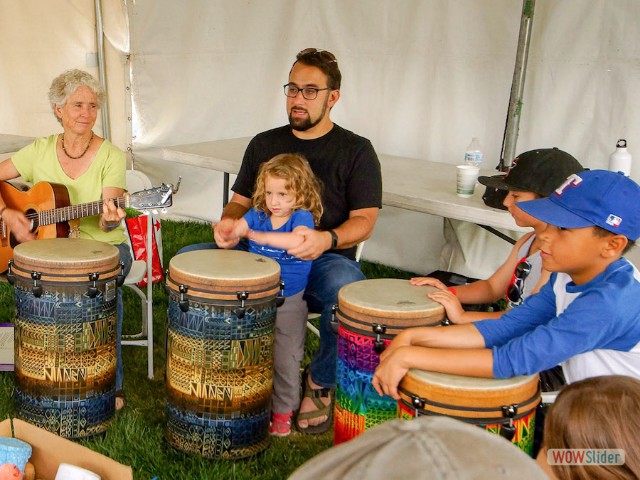
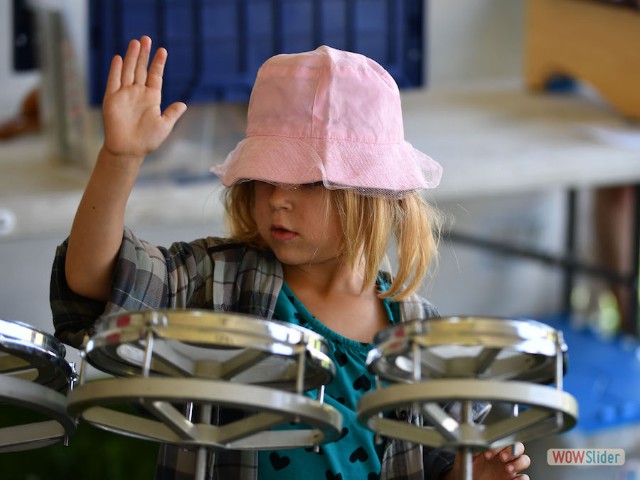
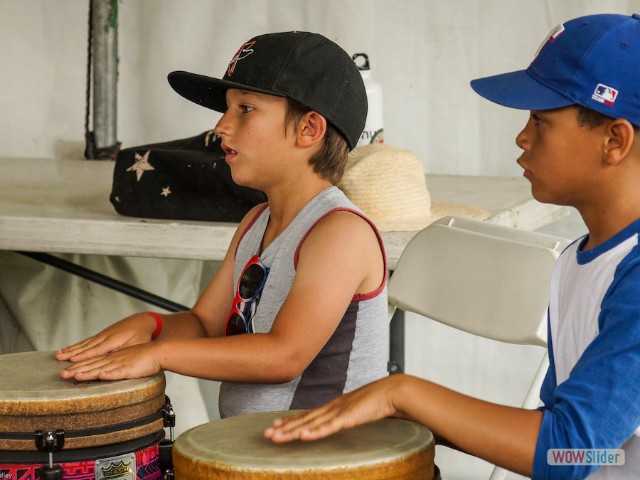
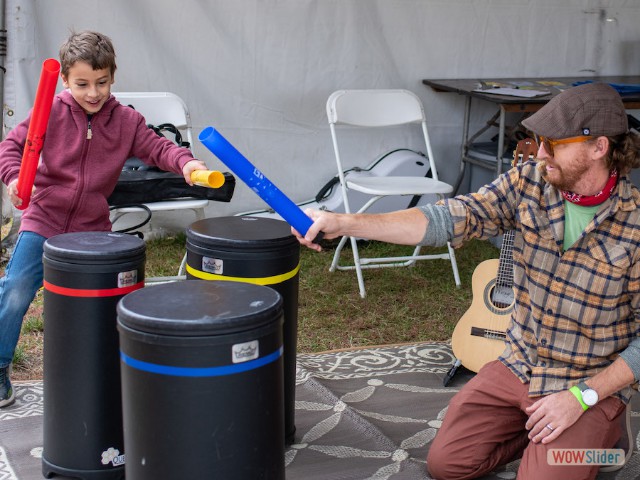
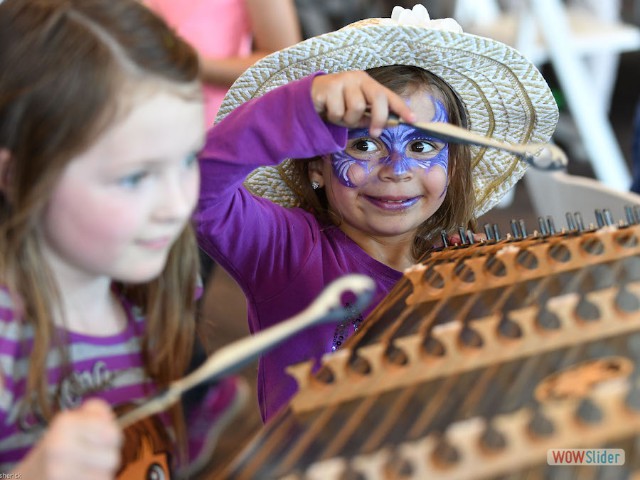
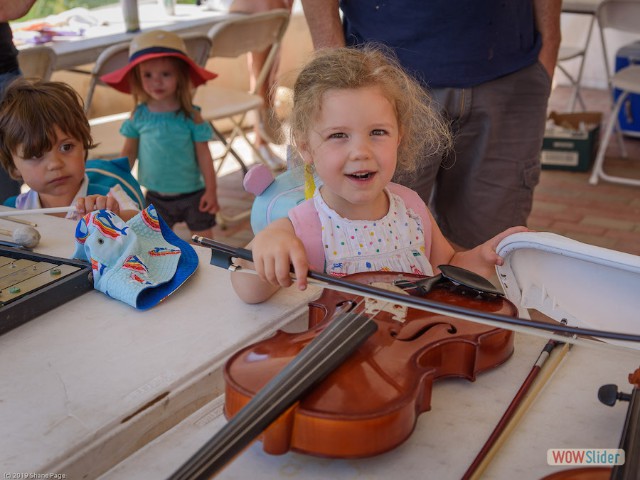
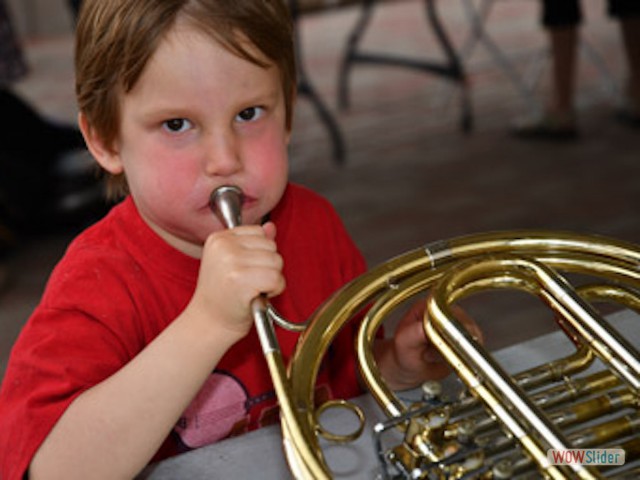
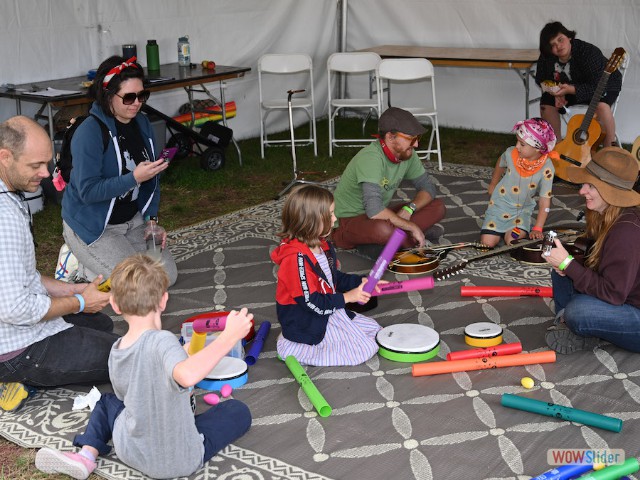
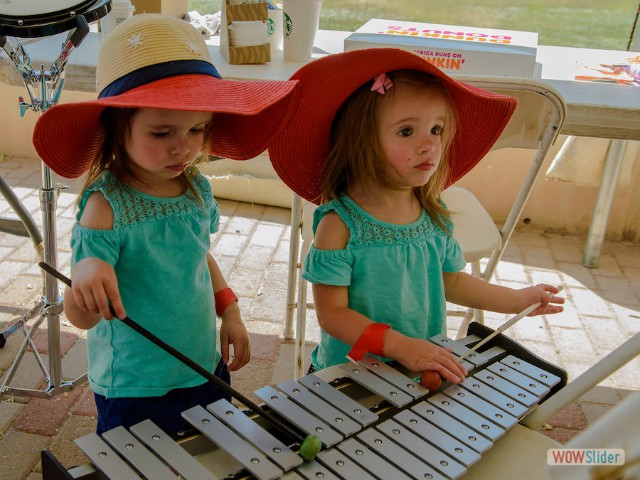
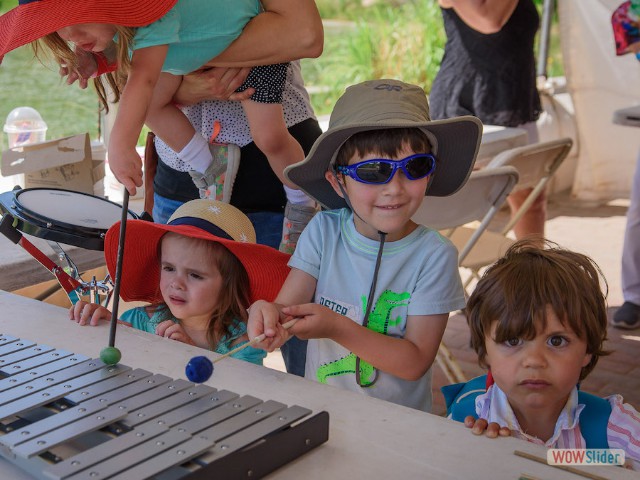
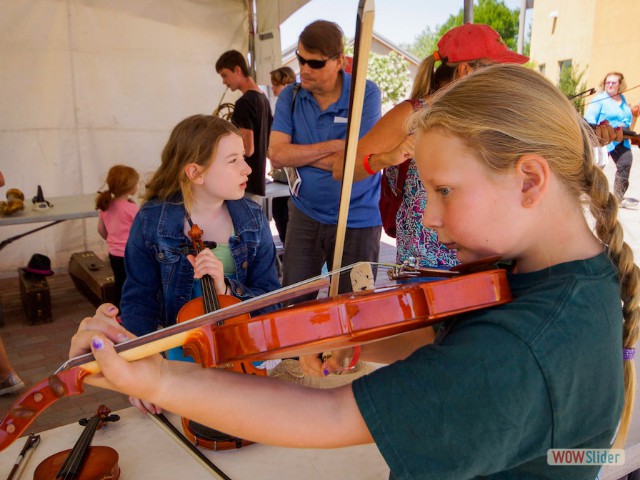
- Back for the third year! Play all kinds of musical instruments at the Musical Instrument Petting Zoo.
- Learn to play the tin whistle at 2 pm in the Children's Tent.
- Check out the hands-on arts and crafts demos going on all day in the crafts area.
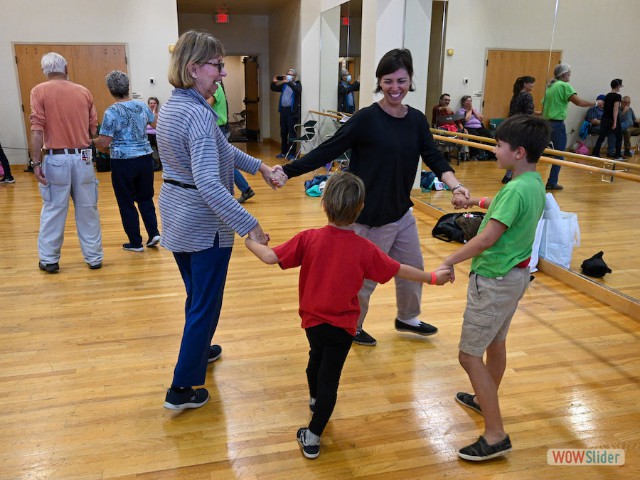
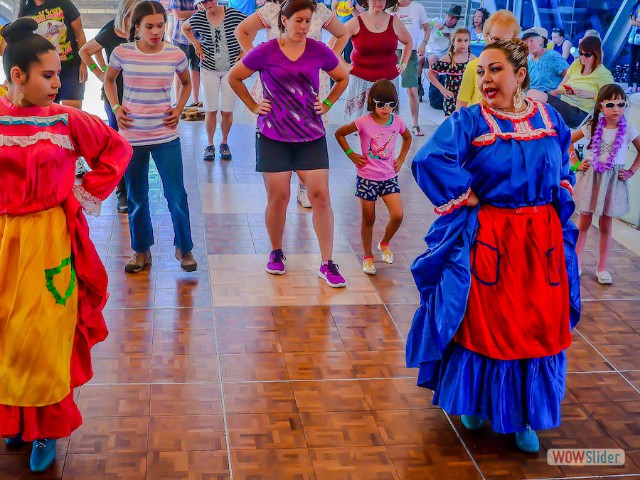
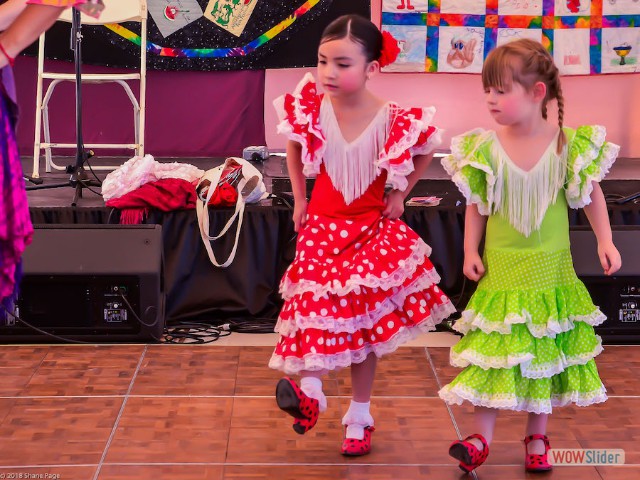
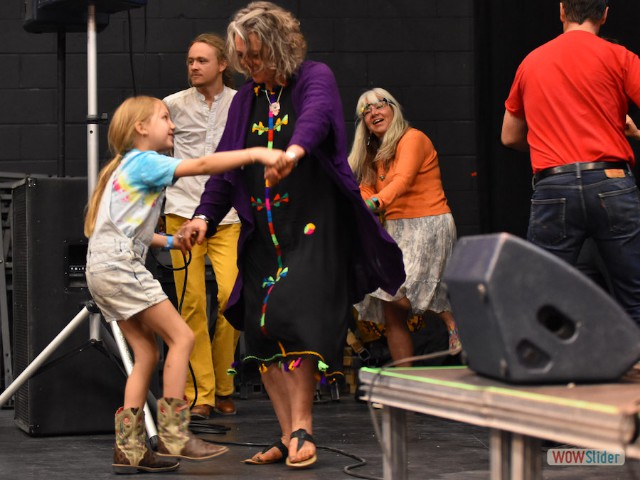
- Dance! There are two different kinds of dance to try every hour.
- Involved in scouting (boy or girl)? You can earn badges through activities at the folk festival. See the information below.
There's tons of stuff for kids at the Folk Festival. Kids are always welcome at the music and dance workshops, there's a special venue for storytelling, plus there's a tent just for kids. A big thank you to Kris Litchman for organizing the Children's Tent.
Children's Tent Schedule
Saturday
| Time | Session | Name | Description |
|---|---|---|---|
| 10:00 AM | Ukes | Roadrunner Ukulele Band | Kids! At last, a musical instrument that's just your size... come watch & hear how it's played, then try one to see how much fun it is. Learn a song in 10 minutes with the Roadrunner Ukulele Band! |
| 11:00 AM | Song Spiral | Patty Stevens | Song Spiral is about community singing, dance and play dedicated to families with wee ones. No child too young and no body too old. Using songs, games and rounds as well as improvisation in the language of the new born, toddlers and all the rest of us will have a super fun laid-back musical adventure. Song Spiral's mission is to build an experience that creates as well as embraces a musical legacy of community music making. Patty Stephens is a jazz singer, music educator, member of the band The Brazil Project. Above all, she's a singer of songs with a marvelous son and lots of lovely brothers and sisters who all sing too. |
| 12:00 PM | Fun with String | Kristin Litchman & Patty Stevens | What can you do with a piece of string? Play cat's cradle, do tricks, whiz buttons, make pictures...and more! |
| 1:00 PM | Rhythm Band | Mad Robin | Learn about tempos and time signatures by shaking, rattling, and banging with the band Mad Robin. |
| 2:00 PM | Tin Whistle Workshop | Dain Forsythe | Learn to play a tin whistle. |
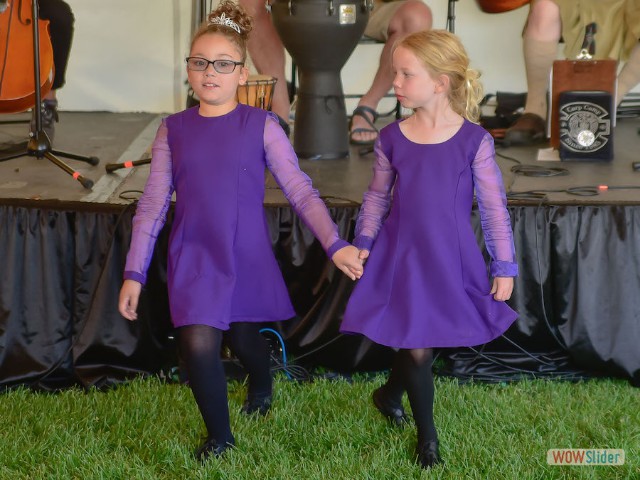
| 3:00 PM | Irish Step Dance | Coleman Academy | Irish Step Dance is noted for leaps, points, and other precise foot movements, done to complex rhythms such as jigs, reels, and hornpipes. Two varieties, soft shoe and hard shoe, can be done as solos, in couples, or in larger groups. The Coleman Academy does performances and offers classes on Saturdays to anyone ages 5 though adult at all levels. |
| 4:00 PM | Children's Talent Showcase | Musicians and dancers ages 5-15 years old share their talents for all to enjoy. |
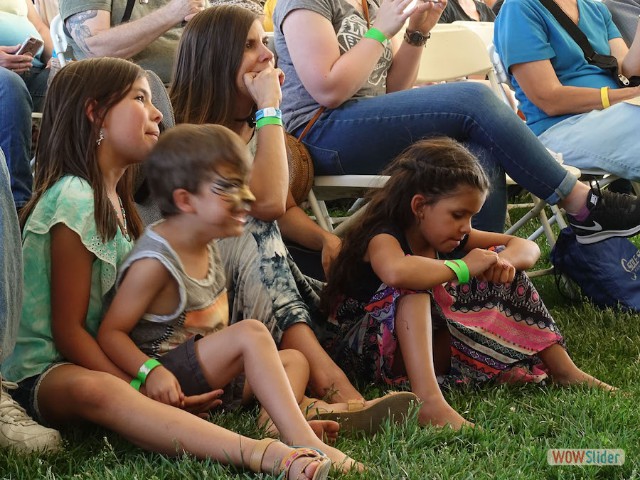
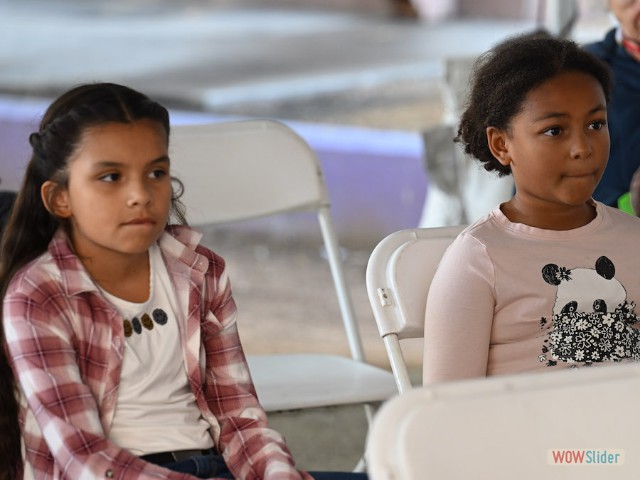
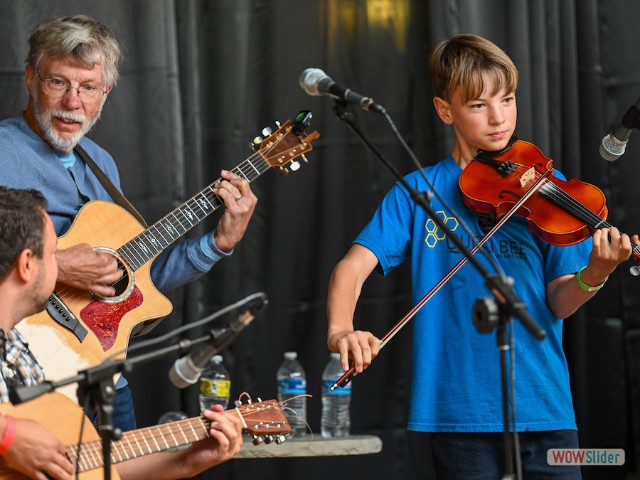
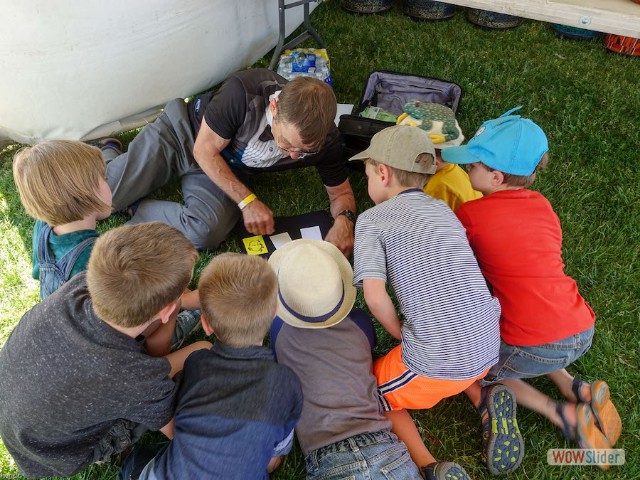
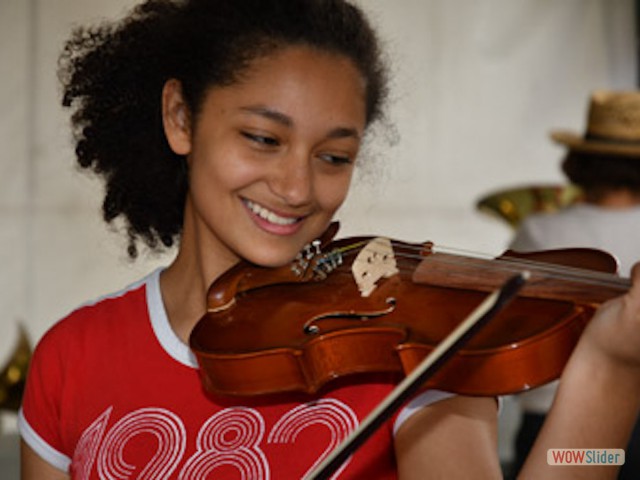
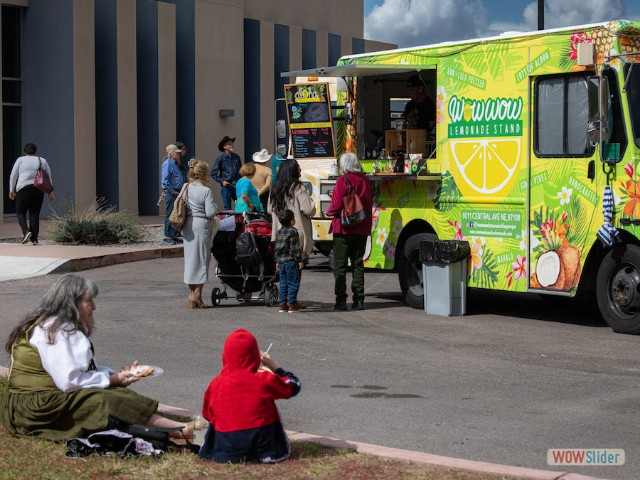
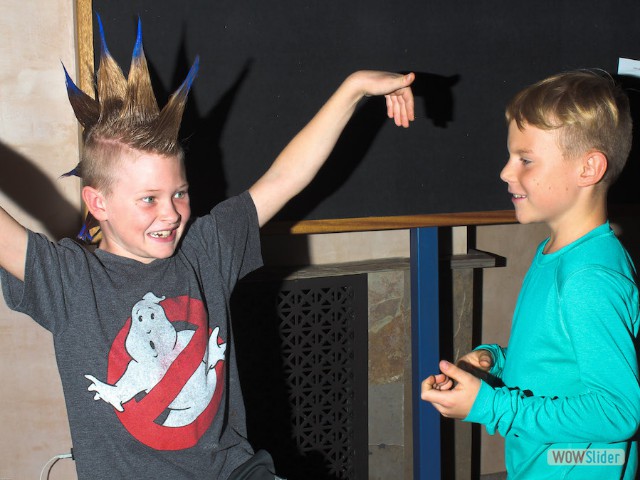
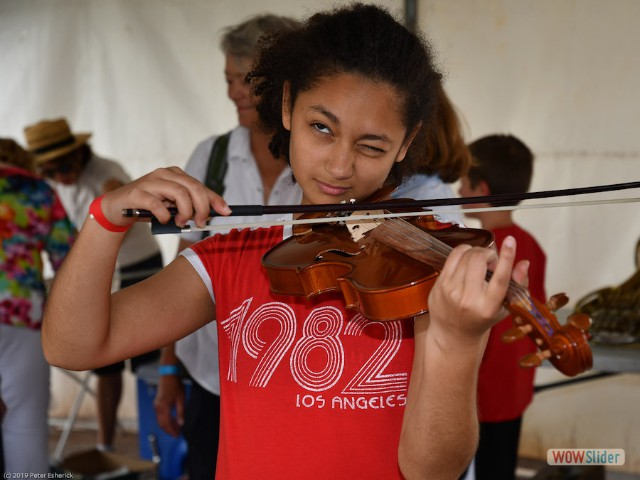
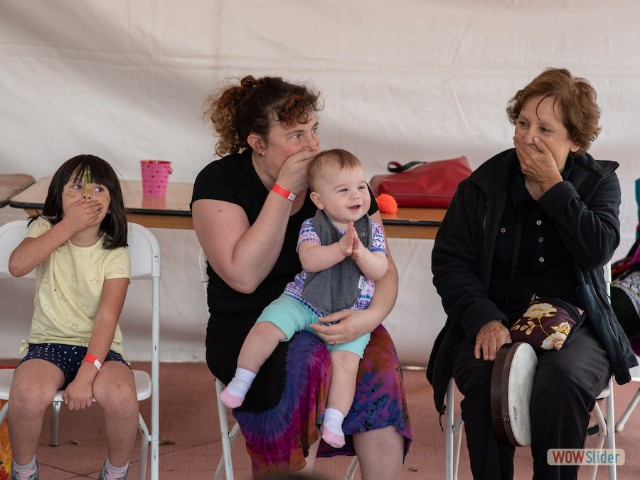
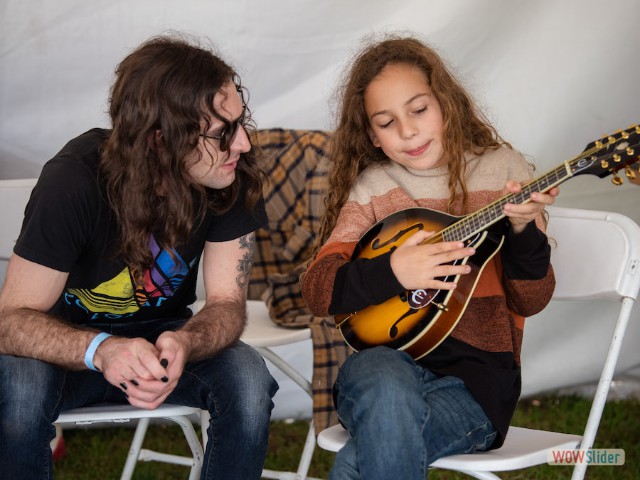
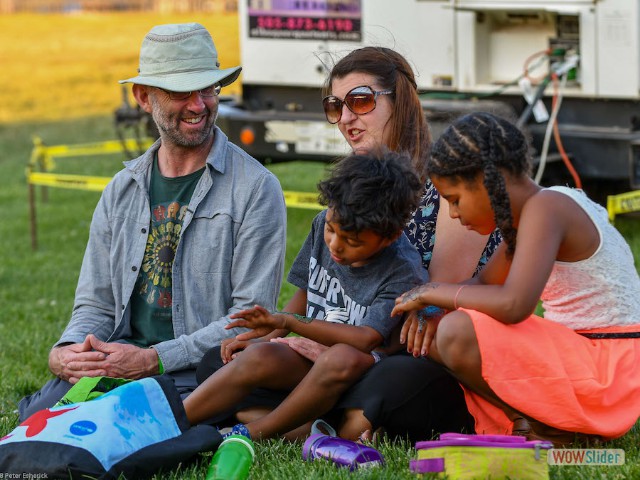
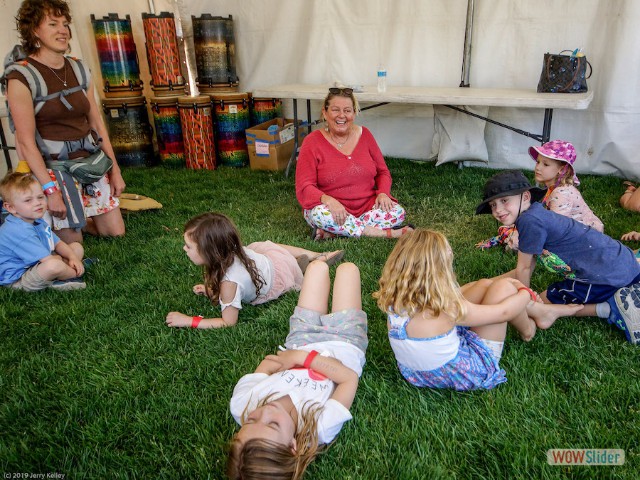
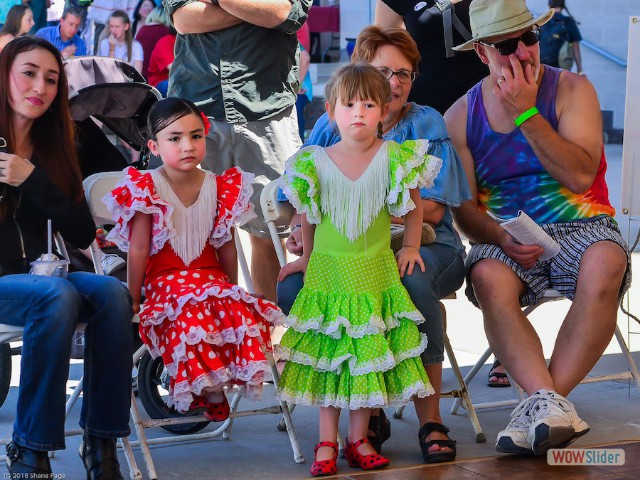
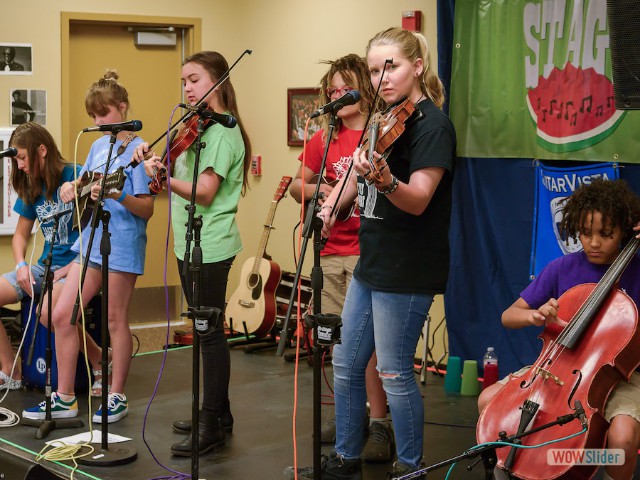
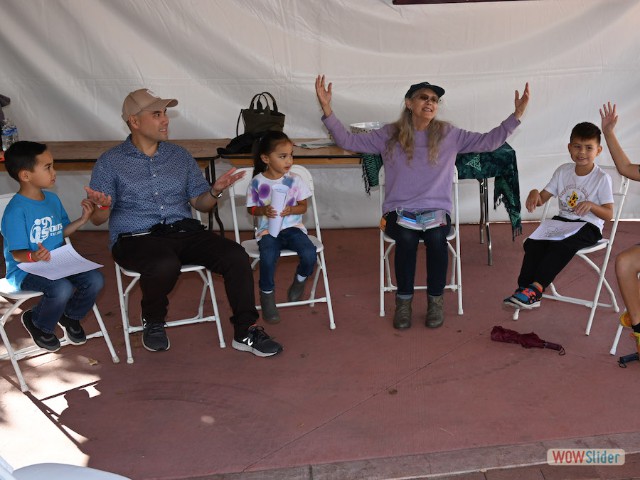
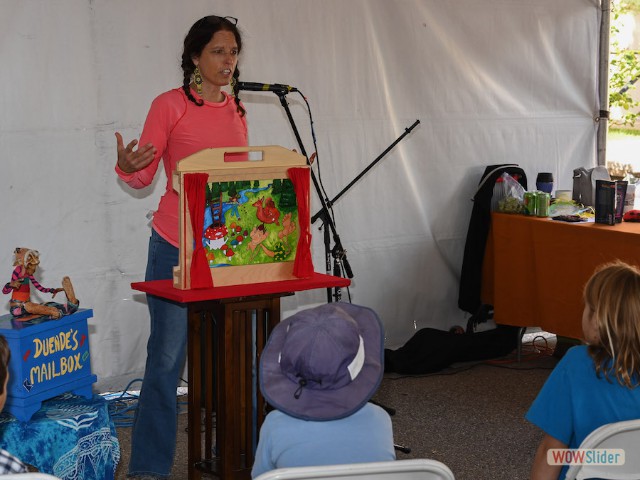
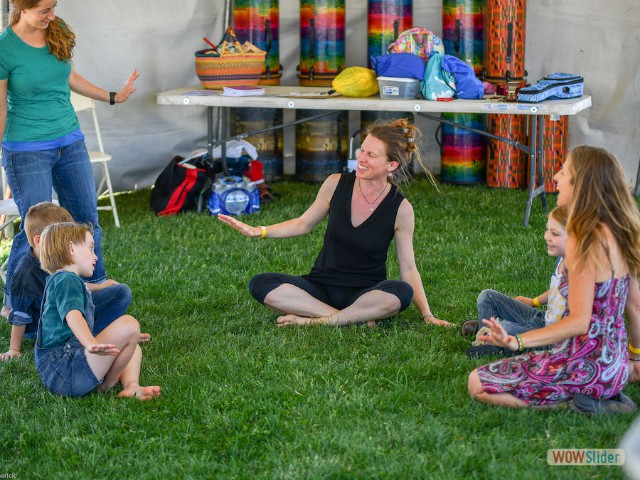
If we haven't convinced you yet, here are a bunch of pictures from previous folk festivals, showing the range of activities for kids.
Remember, kids under 18 and under can come to the Folk Festival for free. So bring the whole family for a full day of music, dancing, singing, storytelling, and arts and crafts.
Albuquerque Folk Festival Activity Patch
Earn a free patch by doing fun things at the folk festival. Just pick up a form at the CD Sales table (or download one here), participate in a variety of the activities available, answer questions, and turn in the form at the CD Sales table by 8:00 pm Saturday night.
There are a total of eight activities. To receive a patch: Ages 2 - 4 need to complete only 1 activity; ages 5 - 8 need to complete 3 activities; ages 9 - 11 need to complete 5 activities; ages 12 - 14 need to complete 6 activities; ages 15 - 18 and adults need to complete all 8 activities. If you don't feel like doing all the activities and earning your free patch, you can purchase one for $2.00 after 4pm on Saturday (we want to make sure everybody who does the activities gets one).
Here are the activities:
- Visit the musical instrument "Petting Zoo" and play some of the instruments. Find out the name of the one you like the best. Which one did you choose?
- Take part in a dance workshop. Write the name of the workshop here. What did you learn about this dance?
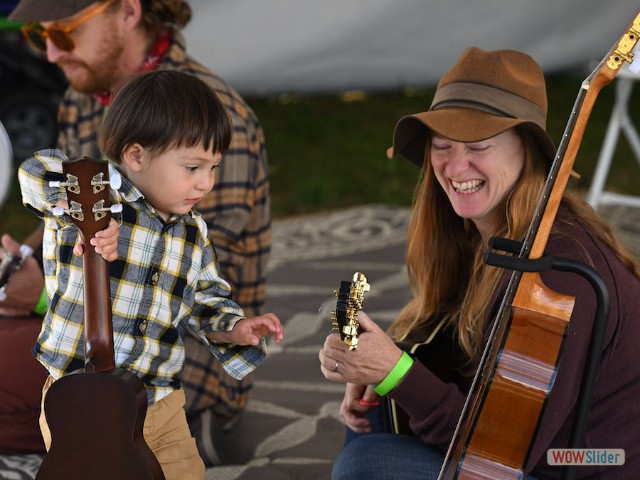
- Take part in a vocal workshop. Write the name of the workshop here. What did you learn about this vocal music?
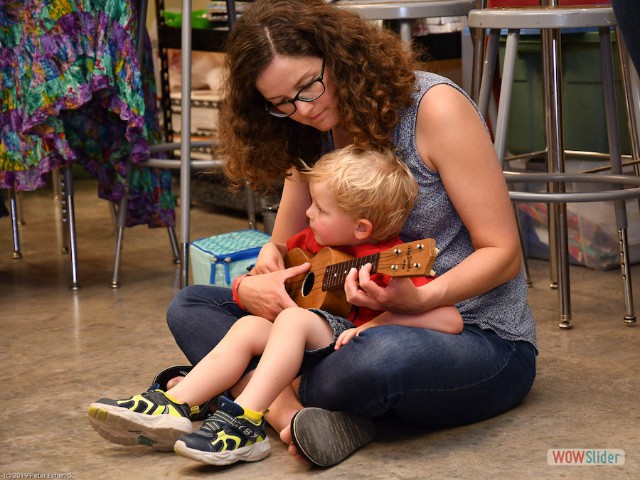
- Take part in an instrument workshop. Write the name of the workshop here. What did you learn about this instrument?
- Visit the folk arts area and learn about the various crafts from people who do them. Which one did you like the best?
- Listen to one of the Villa Hispana performances. Which one did you choose? What did you like best about it?
- Visit one of the Jam Sessions. Describe what it was like.
- Visit the Demonstration Stage and watch a performance. Which one did you choose? What did you like best about it?
Here's the form; click on it to download a pdf version that you can print out and bring to the festival.
Calling All Girl Scouts
Links to Girl Scout Insignia Opportunities
You can download a pdf file with all this information here.
*Means the badge can be completed by attending the event.
Available during the day will be dance, instrument and vocal workshops. jam sessions with accomplished musicians; performances by professional dancers and musicians; an instrument "Petting Zoo"; and an area for folk arts, including knitters, weavers, quilters, woodcarvers and others.
This event provides hands on experience of music, dance and many folk arts. It is an opportunity for younger girls to earn Petals, Try-Its and Badges and for older girls to network with practitioners to learn the necessary skills to complete Interest Projects. In some cases they will be able to complete all the requirements for the badge, in other cases, only one requirement will be completed and it will be up to the girl to finish the other requirements. Please remember that there is no "double dipping". Activities can only apply once (e.g. If you sing a song for Brownie Girl Scouts through the years you must choose a different song to sing for Travel Right).
Daisy
*Rose Petal - Make the World a Better Place
Brownie - (Remember only 4 requirements are needed to complete the try-it)
Brownie Girl Scouts Through the Years - 4.) Sing a Song - Travel back in time. Choose a decade (1920s, 1930s, 1940s, 1950s, 1960s, 1970s, 1980s) and learn a song that was popular then. Sing it for your troop or group, or your family. Then teach it to them.
*Dancercize - 1.) Move to the beat - Practice these movements to your favorite music: March in place, Step forward and backward and swing your arms to the sides, Step sideways and swing your arms in circles, Put your hands on your hips and move from side to side, Walk in a circle, lifting your knees very high while clapping your hands, Make up some of your own moves. Do them for at least 10-15 minutes. 2.) Dance on Stage - Watch a dance performance at a theatre or community center, on an outdoor stage, or on television. What parts of the dance can you imitate? 3.) My Own Dance - Make up a dance to your favorite song. Teach this dance to other girls. 6.) A Dance Story - Use dance to tell a story. Use movement to express feelings such as fear, excitement, sadness, or surprise.
Puppets, Dolls, and Plays - 2.) Yarn Doll - Have fun putting a yarn doll together.
Travel Right - 5.) Sing a Song - Make up a song about traveling. Sing it with your Girl Scout troop or group, or with your family on your next trip. Make up hand gestures to go with the song.
Creative Composing - 1.) Compose a Song - Make up a song for a special day or occasion: a rainy day song, a campfire song, a holiday song, a silly song, a song for a special Girl Scout ceremony. If you play an instrument, make up a song to sing with the instrument. Sing your song alone or with friends. 2.) Compose music for Instruments - Compose a tune for an instrument. It can be an instrument you have made. You can form a band with others and make music together.
*Making Music - 1.) Move to the Music - Listen to different kinds of music: fast, slow, lots of instruments or voices, one instrument or voice. Move your body to the beat of it. Twirl around. Jump up in the air. Take long leaps or make small, gentle movements. Make up movements set to music to tell a story. 2.) Singing in Rounds - Sing in rounds. Practice singing "Make New Friends", or "Row, Row, Row your Boat". What other songs can be sung in rounds? 3.) Action Songs - Action songs connect words, music, and hand movements. "Bingo" is one and the "Brownies Smile Song" is another. Teach action songs that you know to a friend. Learn a new one from a friend. 4.) Melody Glasses - Drinking glasses filled with different amounts of water can become a musical instrument. Set up your glasses and try to play a song. 5.) Music Around the World - Sing songs from different countries. Teach them to others.
*Sounds of Music - 1.) Make Your Own - Percussion instruments make a sound when hit or shaken. They can be drums, rattles, gongs, tambourines, or shakers. Try making a shaker. 2.) Single String Swing - Can one string make music? Try your hand making a "washtub" bass using a large empty food can (#10 or 48 ounce), and a string. 3.) Sliding Air - What does wind have to do with music? Different sounds are made by changing the amount of air in a tube. Try making a bottle whistle using a coke bottle and straw. 4.) Shoebox Guitar - Did you ever think that you could make music with some rubber bands, a shoe box, and a paper towel roll? Try one. 5.) Melody Mobiles - Create a mobile that makes music as it sways in the air. First collect small lightweight items that sounds pleasant to you when they bump into each other. Attach them with string to two coat hangers. 6.) Live Music - Attend a concert put on by a band or orchestra. Are any of the instruments like the ones you made?
Juniors - (Remember only 6 requirements are needed to complete the badge)
*Dance - 1.) Watch Their Moves - You can learn a lot about dance by watching how people (and animals) move. Watch two of the following and use your observations to choreograph or design an original dance: A group of young children playing, Animals in a zoo, such as monkeys, elephants, birds, seals, and reptiles, People on a crowded bus or train, some on their way to or from work, Dancers rehearsing in a yoga, ballet, or modern dance class, An athletic team warming up and playing a sport. 2.) Moods and Moves - Watch how people move when they are sad, happy, angry or lost in thought. Use mood and movement to portray a story or scene through dance. 3.) Step, Stamp, Stomp! - Tap dance, sometimes called dancing on the souls of your feet, is form of dance that accents fancy footwork. Learn three basic tap dance steps. 4.) Dance Watcher - Attend a dance performance, watch one on TV, or observe a dance class. How do the dancers movements match the music? Do the costumes make it more interesting? What did you like most? 5.) Dance Around the World - Explore the dance of a country other than your own. Learn the steps of at least one and dance it well enough to teach it to a friend or group. 6.) Lines and Squares - In line dancing, dancers are arranged in a line, side by side. Each person performs intricate steps to the beat of music. In square dancing, groups of eight form a square, with each person with a partner, in starting position. A square caller calls out the patterns to perform. Attend or put together your own square or line dance. Invite friends and family of all ages. 7.) Country and Western Dancing - Country dancing is fast-paced and musical. Some of the dances that make up country dancing, such as kicker dancing, cowboy dancing, and Western dancing can be done in couples or as line dances. Create a country and western theme dance event, with decor and food to match.
*Yarn and Fabric Arts - 1.) Weave On - Learn how to weave and do one of the following: Weave something on a cardboard loom, make a belt with finger weaving. 4.) Knots - Learn how to make the following knots: Overhand, Square, Granny, Half Hitch, Sheepshank, Clove Hitch. 5.) Knot Project - Do a simple macrame project: belt, plant hanger, bookmark, or placemat. 6.) Knit On - In knitting, learn how to cast on, knit, purl, and cast off. Make a scarf, cap, afghan square, or other small item. 7.) Crochet On - In crocheting, learn how to start a chain, single crochet, double crochet, tie off or end. Crochet a scarf, cap, afghan square, or other small item. 9.) Fabrics of the Past - Find out about a fabric art that was traditionally done by women in earlier times. 10.) Fabrics 'Round the World - Find out about fabric arts that are traditional to a particular culture or country.
*Making Music - 1.) A Family Affair - All instruments belong to different family groups. Choose an instrument family and learn what the members of that family do. 2.) A New Sound - Design a brand new instrument. How is it played? What does it sound like? 3.) Practice, Practice, Practice - The best way to master any instrument is to practice. Try learning two new songs that you can practice, or make up your own silly songs. 4.) Compose Yourself - Write a simple melody of at least eight measures for an instrument. Write down your piece of music using symbols for notes, key, tempo, and dynamics. Try to teach someone to play your newly composed piece. 5.) Musical Roots - Many pieces of music have interesting stories behind them. Pick a piece of music abd find out the following: What was the composer like? What other pieces did he or she compose? When was the music composed? Was it written? Does the piece of music tell its own story? 6.) Be a Conductor - Choose a piece of your favorite music and learn how to conduct the piece. Use something for a baton. 7.) Music with a Theme - Select one of these themes and play music that matches it, for an audience, friends or family: The sea, A river, A busy urban area, A forest, A mountain range, A field or meadow, A circus, or festival, A march or parade. 8.) On Stage - Using your musical skills, take part in a performance in a Girl Scout ceremony, an individual recital, a group erformance, or a community musical event. 10.) The World and its Influence on Music - Throughout history, composers have written songs about significant world events. Some of these pieces were written in celebration. Find out about two pieces of music that were influenced by historical events. Play or sing them for your troop or group, and explain what influenced the composers to write them.
*Music Fan - 2.) Listen to Something New - Listen to at least two types of music that are new to you - either live or recorded. 3.) Sharing Music - Perform! Sing, play an instrument, or produce a performance for others to see. Stage your performance for an audience of at least ten people. 4.) Found Music - Make your own simple musical instrument, using common objects found around the house. Pick one favorite song that you can accompany with your instrument. 6.) Folk Songs from Afar - Every culture has its own folk songs. Some have been translated into English; others are widely sung in their native languages. Learn a folk song from two different cultures. 7.) Careers in Music - You don't have to know how to play and instrument to find a job where music is important. Interview someone with a career that involves music, such as a sound engineer, a music critic, a composer, or a music teacher. Find out why that person chose a music career. How did she learn her job? What does she enjoy about her career? Write up your interview and share it with your troop, friends or family. 8.) Music: Insight into History - Its fun to look back and listen to music that was popular in another time. Find two songs that were written during another period of history. What does the music tell you about that period? Is that music still played today? 10.) Dance Time - Create a dance to a tape or CD that you've chosen.
Cadettes/Seniors/Ambassadors
- Folk Arts
- Heritage Hunt
- Invitation to the Dance
- On a High Note
- The Performing Arts
- Textile Arts
Calling All Boy Scouts
You can download a pdf file with all this information here.
Links to Boy Scout Insignia Opportunities
*Means the badge can be completed by attending the event.
Available during the day will be dance, instrument and vocal workshops. jam sessions with accomplished musicians; performances by professional dancers and musicians; an instrument "Petting Zoo"; and an area for folk arts, including knitters, weavers, quilters, woodcarvers and others.
Boy Scout Opportunities: This event provides hands on experience of music, dance and many folk arts. It is an opportunity for younger boys to earn Tiger, Wolf, Bear and Webelo Awards and for older boys to network with practitioners to learn the necessary skills to complete Badges. In some cases they will be able to complete all the requirements for the badge, in other cases, only one requirement will be completed and it will be up to the boy to finish the other requirements.
Tiger Cubs
*Make a musical instrument
*Along with your adult partner, teach a song to your family or to your den and sing it together.
Wolf
*Family Fun - Attend a concert, a play, or other live program with your family.
*Sing-Along - a.) Learn and sing the first and last verses of "America"; b.) Learn and sing the first verse of our national anthem; c.) Learn the words and sing three cub scout songs; d.) Learn the words and sing the first verse of three other songs, hymns, or prayers. Write the verse of one of the songs you learned; e.) Learn and sing a song that would be sung as a grace before meals; f.) Sing a song with your den at a pack meeting.
Bear
Family Fun -
Cub Scout Band - a.) Make and play a homemade musical instrument; b.) Learn to play two familiar tunes on any musical instrument; c.)Play in a den band using homemade or regular instruments; d.) Play two tunes on any recognized band or orchestra instrument.
Webelos
Showman - 9.) Sing one song indoors and one song outdoors, either alone or with a group. Tell what you need to do differently when singing outdoors; 11.)Tell what folk music is. Hum, sing, or play a folk tune on a musical instrument; 12.) Name three American composers. Name a famous work by each; 13.) Draw a music staff. Draw on it a clef, sharp, flat, natural, note, and rest. Tell what each is used for; 14.) Show the difference between 2/4, 3Ú4, and 4/4 time by beating time or playing an instrument; 15.)While you are a Webelos Scout, earn the Cub Scout Academics belt loop for Music.
*Cub Scout Academics - Music -
For the Belt Loop: 1.) Explain why music is an important part of our culture; 2.)Learn a song with at least two verses and sing the verses to your den or to an adult family member; 3.)Listen to four different types of music either recorded or live.
For the Academics Pin: Earn the Belt Loop and then complete 5 of the following - 1.)Make a musical instrument and play it for your family, den, or pack; 3.)Play a song by yourself or in a group, in unison or in harmony; 4.) Create an original melody and/or original words for a song; 6.) Attend a live musical performance or concert; 7.) Demonstrate conducting patterns for two songs using two different meters while your adult partner or den members sing or play the songs you have selected; 8.)Take voice or dance lessons or lessons to learn to play an instrument.
Boy Scouts
Music - 2.) Name the five general groups of musical instruments. Create an illustration that shows how tones are generated and how instruments produce sound; 3.) Do TWO of the following: a.) Attend a live performance, or listen to three hours of recordings from any two of the following musical styles: blues, jazz, classical, country, bluegrass, ethnic, gospel, musical theatre, opera. Describe the sound of the music and the instruments used, Identify the composers or songwriters, the performers and the titles of the pieces you heard, If it was a live performance, describe the setting and the reaction of the audience, Discuss your thoughts about the music; b.) Interview your parents and grandparents about music. Find out what the most popular music was when they were your age. Find out what their favorite music is now, and listen to three of their favorite tunes with them. How do their favorites sound to you? Had you ever heard any of them? Play three of your favorite songs for them, and explain to them why you like these songs. Ask them what they think of your favorite music; d.) List five people who are important in the history of American music and explain to your counselor why they continue to be influential. Include at least one composer, one performer, one innovator, and one person born more than 100 years ago; 4.) Do ONE of the following: a.) Teach three songs to a group of people. Lead them in singing the songs, using proper hand motions; b.) Compose and write the score for a piece of music of 12 measures or more; c.) Make a traditional instrument and learn to play it.